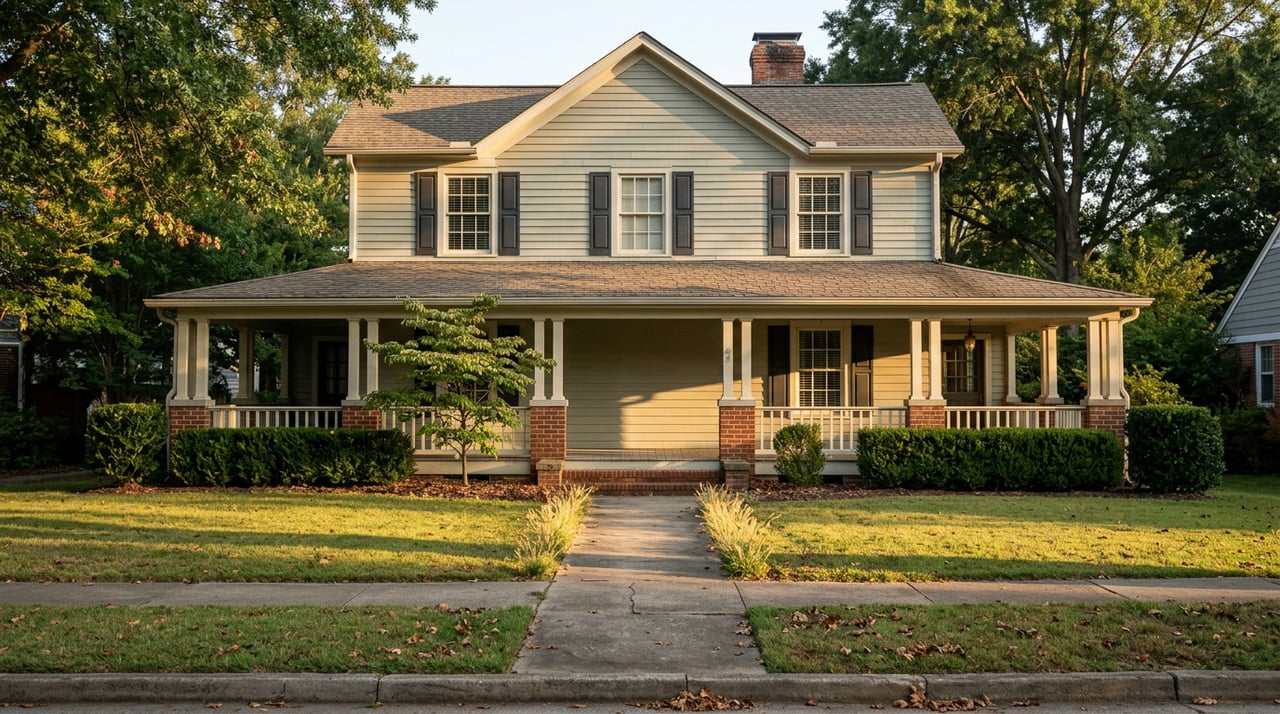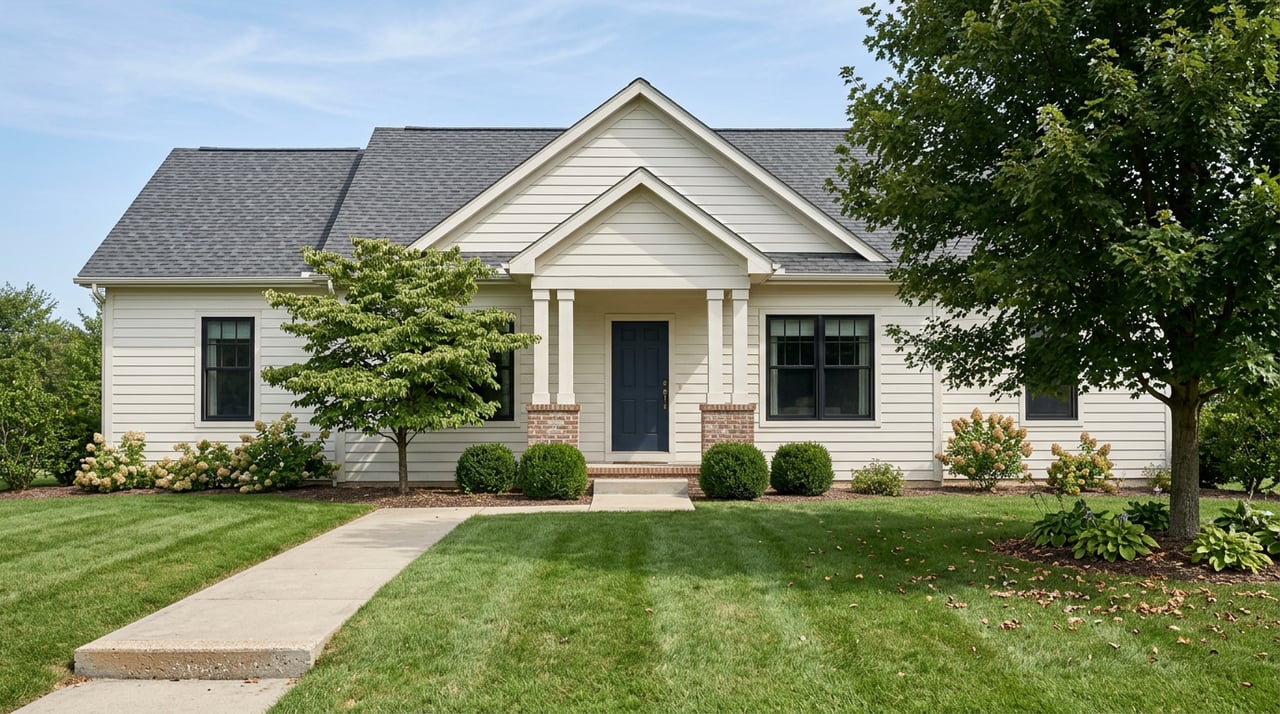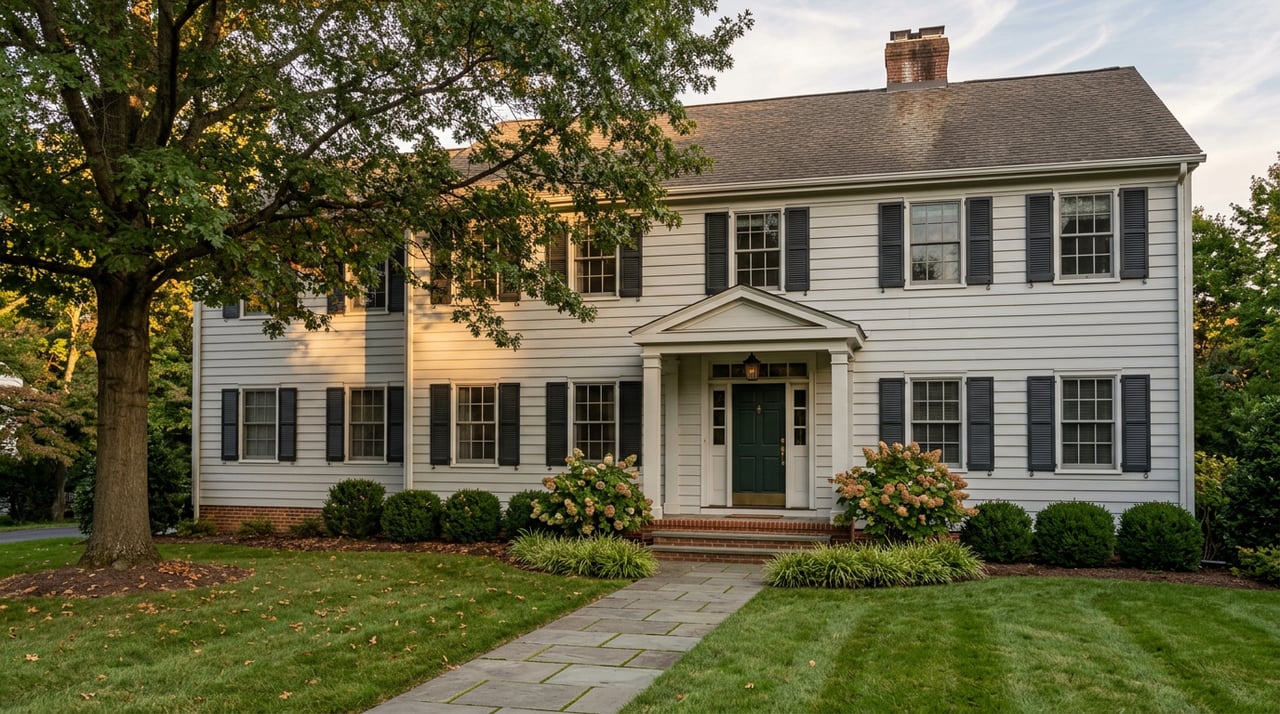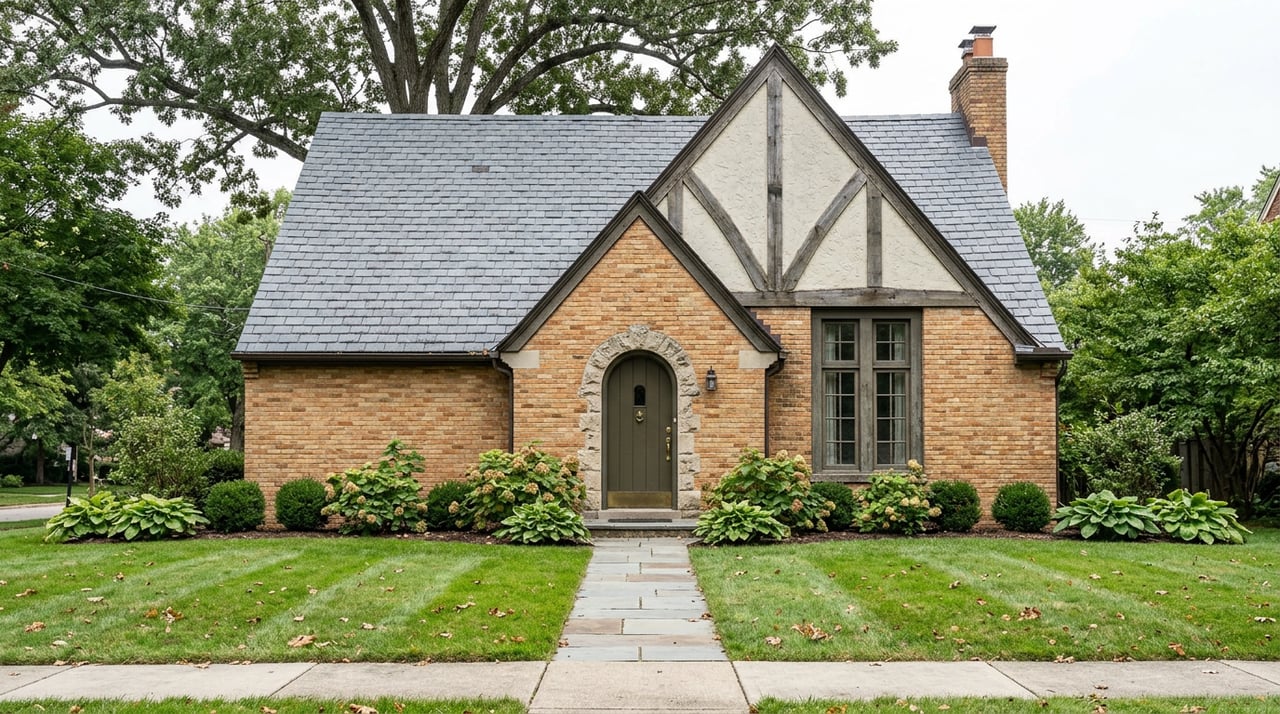
Picture two brick houses a block apart, same era, same roofline, same "Chevy Chase" on the listing sheet. One sits on the District side of Western Avenue. The other sits fifty yards north, in Maryland. A buyer touring both in the same afternoon could reasonably assume the paperwork at closing will look about the same too. It won't. Not the tax bill, not who pays what at the table, and not even which government shows up when something needs fixing on the block.
Western Avenue isn't a neighborhood boundary the way most buyers picture one. It's a governance line. Everything on one side answers to Washington, DC. Everything on the other answers to Montgomery County, and not even to one version of Montgomery County. The two houses share a name because a streetcar developer picked one for both sides more than a century ago. They don't share a rulebook.
Chevy Chase, MD Isn't One Government. It's At Least Eight.
The DC side is simple to describe: it's part of Ward 3, governed by the District, served by DC Public Schools. One government, one set of rules, one property tax rate.
The Maryland side is not one place administratively. It's a patchwork of incorporated towns and villages layered inside Montgomery County, each with its own council and, in some cases, its own additional tax:
- Chevy Chase Village
- Town of Chevy Chase
- Chevy Chase Section Five
- Martin's Additions
- North Chevy Chase
- Chevy Chase View
- Somerset
- Friendship Heights, which functions more as a high-rise condo district than a single-family enclave
A buyer who assumes "Chevy Chase, MD" means one town is already working from the wrong map. Two houses on streets that look identical can sit in different municipalities with different local overlays on top of the county tax bill, and the only way to know for certain is to check the specific address, not the general area.
What the Line Actually Costs You at the Closing Table
Here's where the difference stops being trivia and starts affecting your wire transfer. It isn't really about which side has the "higher" tax. It's about who is on the hook for which piece, and that convention flips completely depending on which side of Western Avenue you're standing on.
In DC, the custom is a clean split by tax type: the seller pays the transfer tax, the buyer pays the recordation tax. In Montgomery County, the custom is different: state transfer tax, county transfer tax, and county recordation tax are all typically split 50/50 between buyer and seller, though that split is negotiable in the contract.
Run the same $1.2 million sale price, roughly the middle of the current range for Chevy Chase, MD homes in early 2026, through both systems and the shape of the bill changes even when the totals land close together.
| DC side | Maryland side | |
|---|---|---|
| State transfer tax | — | 0.5% ÷ 2 = $3,000 (buyer's share) |
| County transfer tax | — | 1.0% ÷ 2 = $6,000 (buyer's share) |
| County recordation tax | — | Tiered rate: $8.90 per $1,000 on the first $500,000, $13.50 per $1,000 above that, minus a $890 owner-occupied credit, split 50/50 = roughly $6,500 (buyer's share) |
| DC transfer tax (seller pays) | 1.45% = $17,400 | — |
| DC recordation tax (buyer pays) | 1.45% = $17,400 | — |
| Buyer's out-of-pocket tax exposure | ≈ $17,400 | ≈ $15,500 |
Montgomery County's tiered recordation rate above reflects the increase under Bill 17-23, which took effect October 1, 2023, and raised recordation tax rates significantly on the premium tiers.
The combined totals across both sides of a $1.2 million deal land within a few percentage points of each other. But a DC buyer is contractually staring down the full recordation tax alone, while a Maryland buyer is only carrying half of three separate line items. If you've bought a house in Maryland before and assume that same 50/50 rhythm applies once you cross into DC, you'll be surprised by a bigger buyer-side number than you budgeted for. The reverse is true too: sellers moving from a DC transaction into a Maryland one sometimes expect to hand off the whole transfer tax and are caught off guard when it's split down the middle instead.
The First-Time Buyer Break That Rarely Reaches This Zip Code
Both jurisdictions offer a discount for first-time buyers, and both are worth knowing about, but they behave very differently once actual Chevy Chase prices are involved.
DC offers a reduced recordation tax rate for first-time buyers, but only on properties up to $753,000 as of tax year 2025. Detached single-family homes on the Maryland side of Chevy Chase averaged around $2.27 million in early 2026, well above that cap. Chevy Chase is routinely described as one of the higher-priced pockets of the District as well, which means a discount that works well in plenty of DC neighborhoods can stop being useful once you're shopping for a single-family home here specifically.
Maryland's version works differently. First-time Maryland homebuyers get the state transfer tax cut from 0.5% to 0.25%, and that reduction applies no matter what the sale price is. It's a smaller percentage break, but it isn't capped out of relevance the way DC's threshold can be at this specific price range.
Two Libraries, Two Speeds
If the tax mechanics show how differently the two governments handle a transaction, the last four years of library politics on both sides of Western Avenue show how differently they handle a project.
On the DC side, Mayor Muriel Bowser's office announced on January 16, 2026 that it had selected Rift Valley Chevy Chase, LLC to redevelop the Chevy Chase Civic Site on Connecticut Avenue. The plan replaces the existing library and community center, both built between 1968 and 1971, with a new 23,500-square-foot library and a 21,600-square-foot community center, plus 177 units of housing, 54 of them affordable. The project moved from a request for proposals to a selected developer, and as of early 2026 the city and DC Public Library were moving into community design meetings.
On the Maryland side, the same basic idea, a rebuilt library paired with mixed-use housing, has been debated since 2022, when the Montgomery County Council passed a budget amendment calling for exactly that kind of project. As of May 2026, advocates with the Coalition for Smarter Growth were raising concerns that the county's draft capital budget had reverted to funding only "improvements to the existing library," which they read as a shift back toward renovation rather than the redevelopment the council had originally approved.
Neither outcome is better or worse on its face, and Chevy Chase residents on the DC side have their own real disagreements about the housing that's coming to their block. But the pattern is worth sitting with if you're weighing long-term neighborhood character on one side of the line versus the other. One government moved from proposal to selected developer to community meetings inside about two years. The other has been circling the same basic question since 2022 without a comparable resolution as of this year's budget cycle. If civic follow-through matters to how you think about a neighborhood's next decade, that's a real difference, and it has nothing to do with home prices.
What This Means If You're Actually Comparing Two Houses Right Now
None of this should scare you off either side of Chevy Chase. It should change what you ask before you write an offer.
Confirm the exact municipality, not just the ZIP code, for any Maryland-side address, since Chevy Chase Village, the Town of Chevy Chase, and the other municipalities can carry different local tax overlays on top of the same county rate. Ask your title company or settlement attorney to run the actual numbers for your specific price point rather than assuming a percentage you've seen quoted for "the DC area" in general, since the payer conventions differ enough that a rough estimate can be off by thousands of dollars on either side of the line. And if you're a first-time buyer counting on a tax break to make the math work, check the DC threshold against your actual price range before you rely on it.
A Few Questions Worth Asking Before You Write an Offer
Is the transfer tax split always negotiable in Maryland? The 50/50 custom is common, but it's a contract term, not a law. In a competitive offer, buyers sometimes propose covering a larger share to stand out. Sellers looking for a fast close sometimes offer to cover more themselves.
Does living in Chevy Chase Village mean paying extra on top of Montgomery County taxes? It can. Chevy Chase Village and the other incorporated towns operate their own budgets and services in addition to the county, so it's worth asking specifically what a given municipality assesses before assuming the county rate is the whole story.
Does the DC side actually have lower property taxes than the Maryland side? That comparison depends on assessed value, applicable credits, and which Maryland municipality you're comparing against, since the two systems aren't structured the same way to begin with. It's a question worth running with real numbers for the specific address you're considering rather than a general rule of thumb.
If you're weighing a specific address on either side of Western Avenue and want someone to actually run these numbers for your price point before you write an offer, Branches Realty is a phone call away. Talk to a Local Broker.