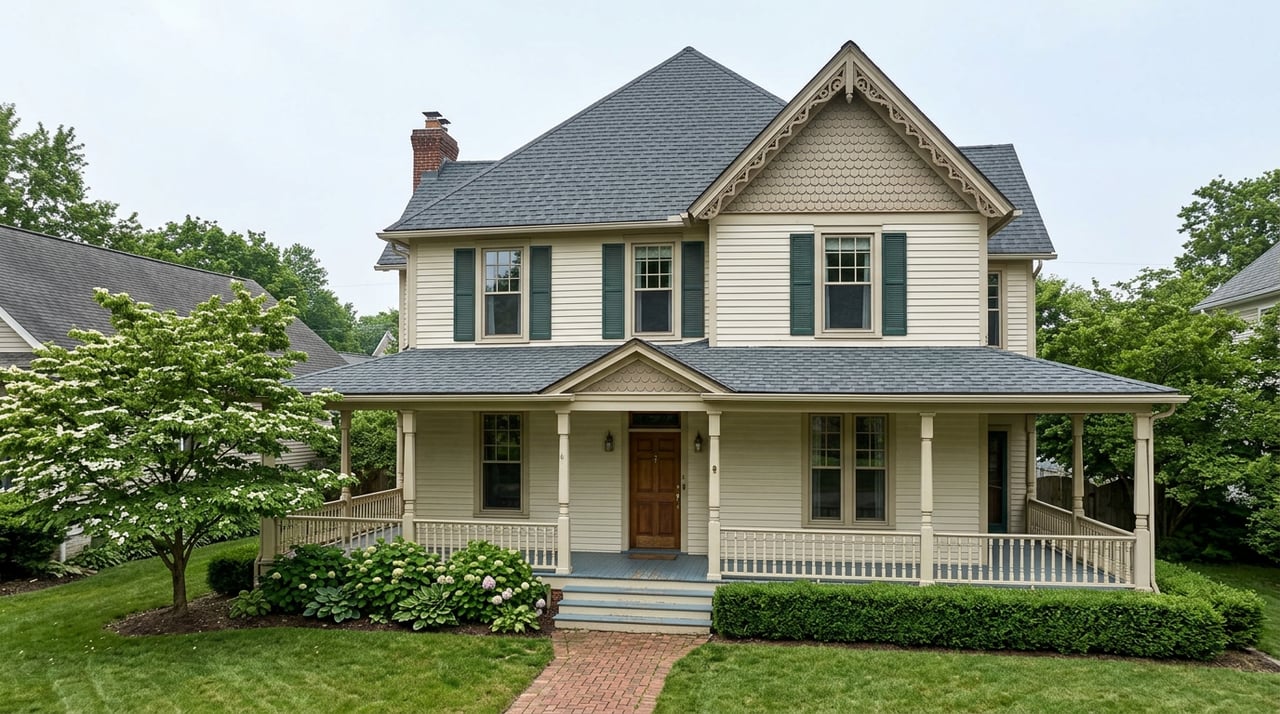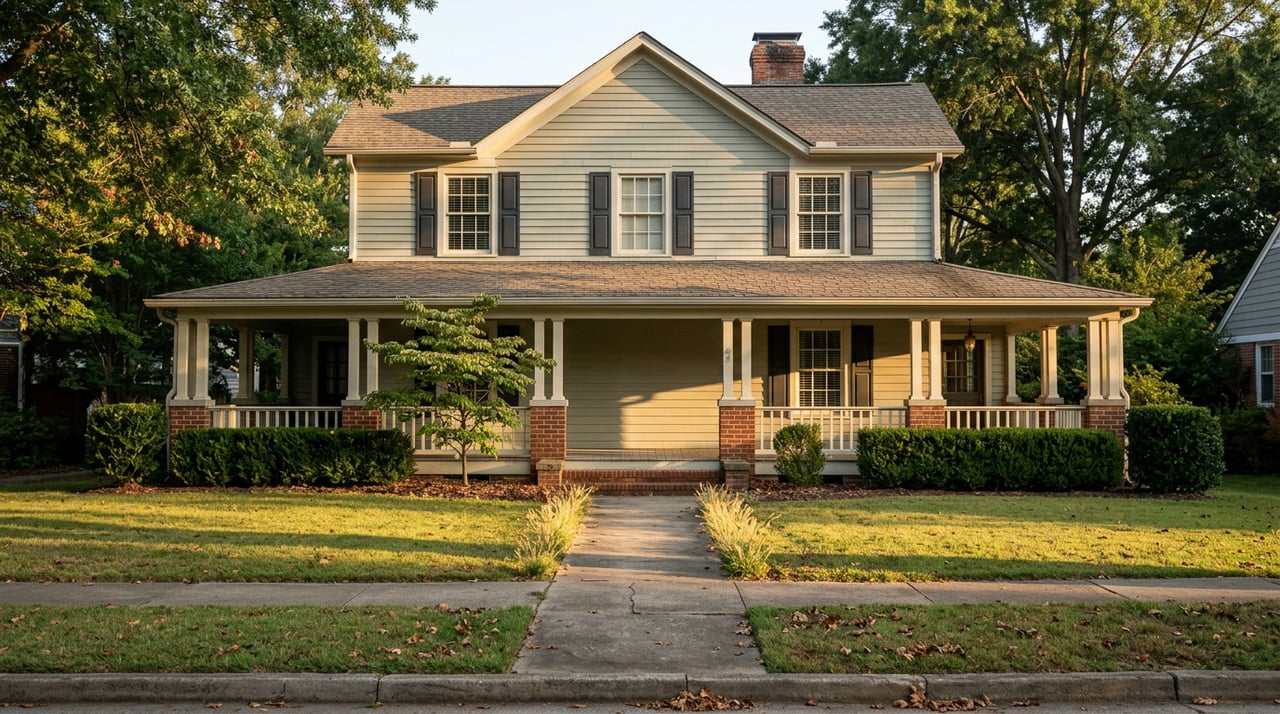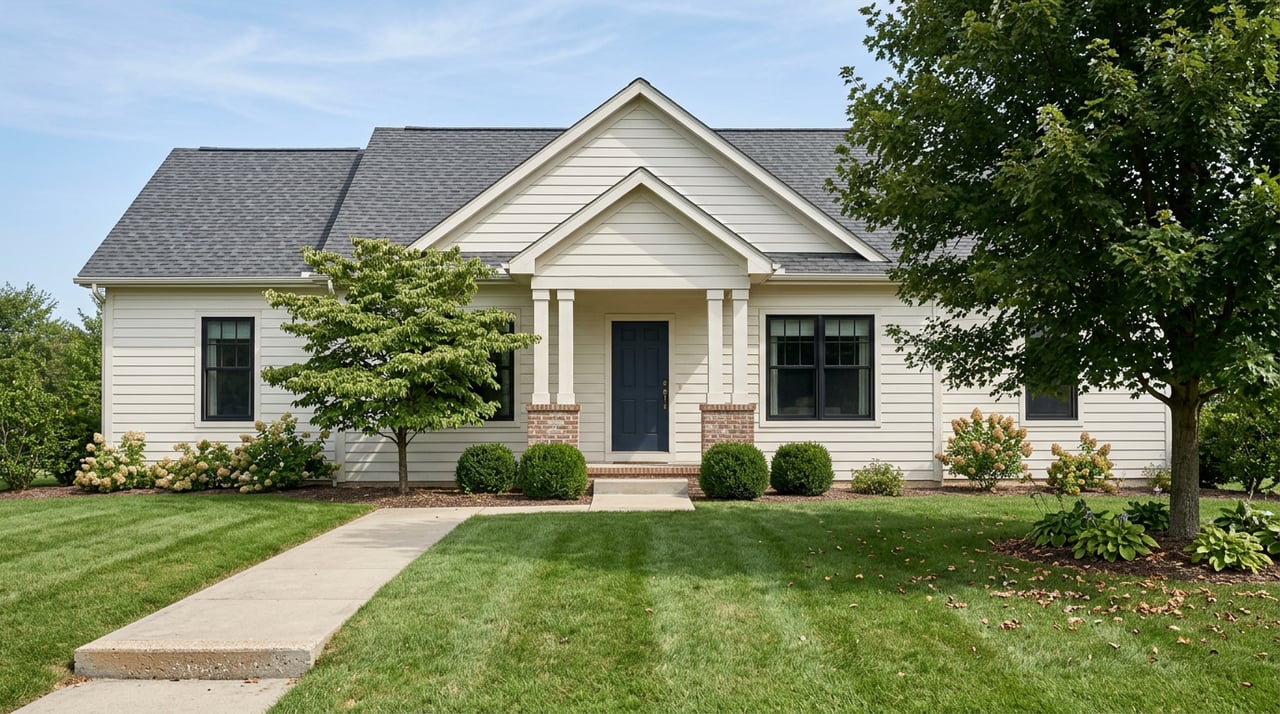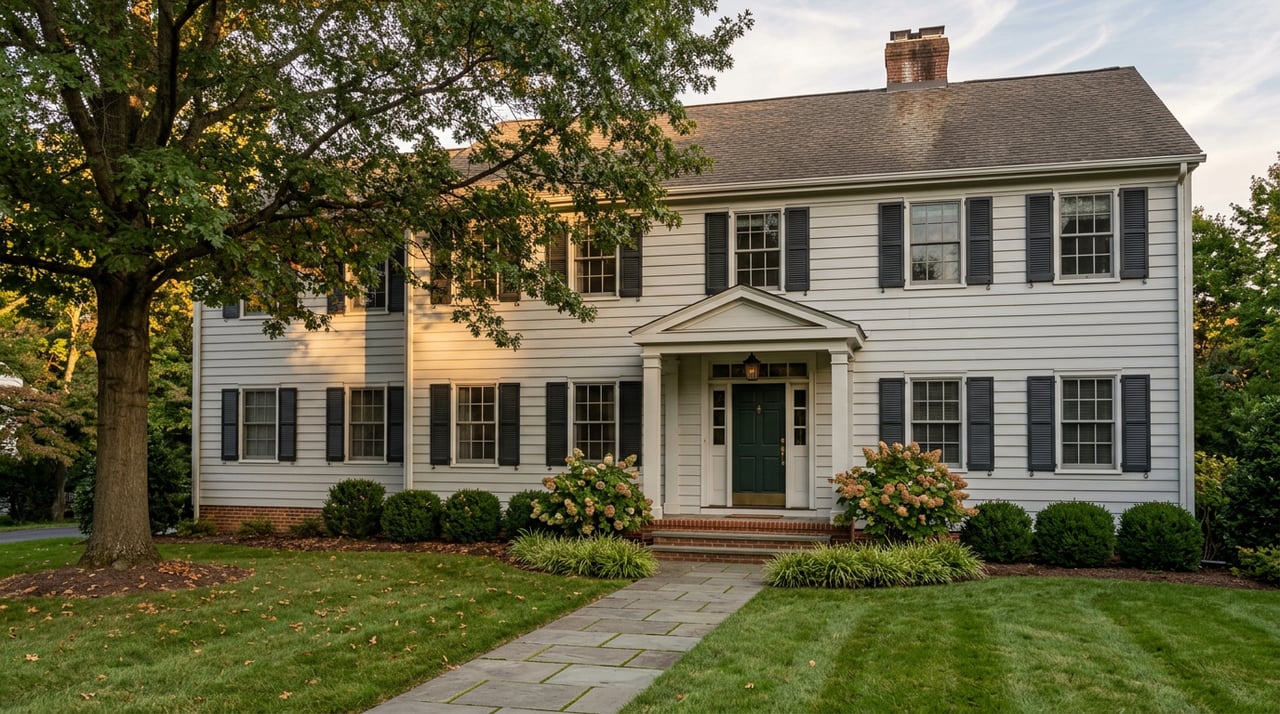
Tour a downtown Silver Spring condo this month and the agent will likely mention the days-on-market number like an apology. Tour an open house for a brick colonial in Woodside Park the same weekend and you may find five other cars already parked along the curb. Same zip code, same three-month stretch, two completely different transactions happening at once.
The numbers back up what the open houses are showing. Over the three months ending in June 2026, the median sale price for a Downtown Silver Spring condo was $325,000, down 11.6 percent from the same stretch a year earlier, with the typical unit now sitting on the market 68 days instead of 43. A short drive away, detached homes in North Silver Spring closed at a median of $893,000 over that same window, up 23.1 percent, moving in about 26 days. Both figures get folded into the single "Silver Spring median" a buyer sees on a portal search, which landed around $672,000 for the broader area, up a modest 2.6 percent. That blended number isn't inaccurate. It just doesn't describe either market a buyer is actually shopping in.
The gap has two separate causes, and neither one is a seasonal blip that reverses by spring.
The Two Markets, Side by Side
| Segment | Median Sale Price (3 mo. ending June 2026) | Year-Over-Year Change | Typical Days on Market |
|---|---|---|---|
| Silver Spring overall | $672,000 | +2.6% | 34 days |
| Downtown Silver Spring condos | $325,000 | -11.6% | 68 days |
| North Silver Spring detached homes | $893,000 | +23.1% | 26 days |
Notice something else buried in the volume figures. Silver Spring as a whole sold more homes in June 2026 than the year before, 141 versus 134. But downtown condo closings actually fell, from 21 in June 2025 to 13 in June 2026. The overall growth is coming entirely from the house side. Condos are shrinking as a share of what's changing hands, not just softening in price.
Why the Condo Number Keeps Sliding
The mechanism here isn't buyer taste shifting away from urban living. It's a law.
Maryland's House Bill 107 rewrote the rules for how condominium associations fund their reserves, the accounts that pay for roof replacements, elevator overhauls, and structural repairs. Before the law, a board could vote to underfund reserves indefinitely and hope nothing broke. HB 107 ended that option. Condo associations had to have a compliant funding plan in place by October 1, 2025, with homeowners associations following on a similar timeline in 2026. Boards that had spent years keeping monthly fees artificially low are now required to true up, and that shows up as real dollar increases on next year's assessment notice.
A building like the Silverton, the 325-unit condo conversion of the old Canada Dry bottling plant in the heart of downtown, is a fair stand-in for what buyers are running into across that submarket. Monthly fees at buildings like it already run in the $400 to $800 range before accounting for a post-HB 107 reserve catch-up. A buyer who ran the numbers on a $325,000 unit two years ago is now running them again with a materially different monthly numerator, and that recalculation is a big part of why days on market nearly doubled and the median price dropped.
This isn't unique to Silver Spring. It's a statewide change hitting every Maryland condo and co-op with common elements to maintain. But downtown Silver Spring has a dense concentration of the exact building type most affected: mid-rise and high-rise conversions from the 2000s with aging major systems and years of conservative reserve funding behind them.
Why the House Number Keeps Climbing
On the detached-home side, the story is about what didn't change rather than what did.
Montgomery County did pass a zoning reform aimed at loosening single-family restrictions. The County Council approved Zoning Text Amendment 25-02 in July 2025 as part of the broader More Housing N.O.W. package, and it took effect November 1, 2025. It allows duplexes, townhomes, and small apartment buildings on lots that previously permitted only one detached home. That sounds like it should ease scarcity across the board. It doesn't, because the reform is deliberately narrow. It applies to roughly 2,500 lots countywide, concentrated along major thoroughfares like Georgia Avenue, not on the interior residential streets where most buyers are actually competing for a house.
Woodside Park is a clean example of exactly the kind of street the reform doesn't touch. Platted in 1922 on the former estate of newspaper publisher Crosby S. Noyes, its roughly 600 homes sit on winding, park-like lanes that follow the original land contours rather than a grid, bounded by Georgia Avenue, Colesville Road, Spring Street, and Dale Drive. The neighborhood is currently under a second look from the county's Historic Preservation Commission, which held a public hearing in April 2026 to evaluate whether parts of Woodside should move from informal protection into a formally designated historic district. If that designation advances, it adds another layer of review on top of standard zoning, not less. Either way, ZTA 25-02's corridor-only design means a neighborhood like Woodside was never going to see new supply from this reform in the first place.
South Four Corners tells a similar story with a different housing stock. Its ramblers, Cape Cods, and colonials, most built between the 1930s and 1950s, sit on tucked-away streets near the Woodmoor Shopping Center and within walking distance of the Forest Glen Metro station. Homes there have recently traded in the low-to-mid $600,000s and moved in as little as two to three weeks. Like Woodside Park, it's an interior residential grid, not a corridor lot, so the zoning reform passes it by entirely.
Put the two pieces together and the mechanism becomes clear. The reform that was supposed to add detached-home-adjacent supply is targeted almost exclusively at arterial roads, while the classic walkable streets buyers actually want, the ones with mature trees and a five-minute walk to a Metro station, keep the same restrictive zoning they've had for decades. Scarcity on those streets isn't a temporary condition. It's the deliberate design of the policy.
What This Means If You're Choosing Between the Two
If a condo and a detached home in Silver Spring both fit your budget on paper, the two paths now require different homework.
For a condo, ask for these before you write an offer:
- The association's most recent reserve study and whether its funding plan is HB 107 compliant
- How much the monthly assessment has changed over the past two years, not just its current amount
- Whether any special assessment is pending or has been discussed at recent board meetings
For a detached home on a classic interior street, the calculus is different. You're not underwriting a building's financial health. You're underwriting the fact that the supply constraint you're competing against isn't going away next year, which is exactly why multiple-offer situations on streets like those in Woodside Park or South Four Corners aren't unusual right now.
A Realistic Read Going Into Fall
Both trends described here are structural, tied to a state law and a zoning ordinance with specific effective dates already on the books, not to interest rates or the calendar. That means the condo-versus-house gap in Silver Spring is more likely to persist through the rest of 2026 than to close on its own.
If you're trying to figure out which side of that gap makes sense for your budget and your timeline, that's exactly the kind of block-level read a portal search can't give you. Branches Realty tracks these shifts building by building and street by street across Silver Spring, Takoma Park, and the surrounding Montgomery County suburbs. Talk to a Local Broker before you decide which market you're actually shopping in.
A Few Questions Worth Asking First
Does HB 107 apply to townhomes, or only high-rise condos? It applies to any community governed by the Maryland Condominium Act, the Homeowners Association Act, or the Cooperative Housing Corporation Act, which covers condo-style townhomes as well as high-rises. HOAs for detached-home communities with shared amenities like pools or private roads face the same reserve-funding requirement on a slightly later timeline in 2026.
Could missing middle zoning eventually reach a neighborhood like Woodside Park? Not under the current legislation. ZTA 25-02 was written to apply to designated corridor lots near major roads, not interior residential streets. Woodside Park's curving lanes sit inside that boundary, not on it, and the neighborhood's possible move toward formal historic district status would add review requirements on top of standard zoning rather than opening it up.
Is the condo price drop specific to downtown Silver Spring, or is it happening countywide? The reserve-funding pressure from HB 107 applies to every qualifying association in Maryland. Downtown Silver Spring is simply concentrated with the building type, mid-rise and high-rise conversions from the 2000s, most exposed to a sudden reserve catch-up after years of conservative funding.