Looking for a place that feels creative, connected, and a little different from the usual close-in suburb? Mount Rainier, MD stands out for exactly that mix. If you want walkable daily errands, an arts-centered local identity, and easy access to Washington, D.C., this small Prince George’s County city deserves a closer look. Let’s dive in.
Why Mount Rainier Feels Different
Mount Rainier is a small incorporated city in northwestern Prince George’s County, right next to Washington, D.C. The U.S. Census Bureau counted 8,333 residents in 2020 and estimated 8,269 residents in 2024, which helps explain why the city often feels compact and personal rather than sprawling.
That close-in feel is not accidental. Mount Rainier developed largely between 1900 and 1939 as an early streetcar suburb, and the city still reflects that history in its older street grid, modest lot patterns, and neighborhood layout. If you like places with a little texture and history, that can be a big part of the appeal.
The housing footprint also supports that smaller-scale feel. Maryland’s 2020 census profile shows 3,655 housing units with a 95.1% occupancy rate, which points to an established residential community rather than a place defined by large new developments.
Arts in Mount Rainier Are Real
The arts are built into daily life
Mount Rainier is not just using art as a marketing label. The city describes itself as home to a vibrant arts community with studios, performance spaces, recurring open studio tours, exhibits, and art installations. That means the creative identity shows up in physical spaces and regular programming, not just in slogans.
Mount Rainier is also part of the broader Gateway Arts & Entertainment District. According to the Maryland State Arts Council, that district stretches along a two-mile Route 1 and Rhode Island Avenue corridor and includes artist housing, studios, galleries, restaurants, and arts-related businesses.
Creative institutions shape the local vibe
The city highlights organizations and resources like Joe’s Movement Emporium, the Mount Rainier Arts Commission, and public art programming. Gateway CDC also points to the Gateway Media Arts Lab on Rhode Island Avenue, which reinforces that the arts ecosystem is neighborhood-based and visible.
For buyers, that can translate into a community where creative activity feels woven into the streetscape and local calendar. For sellers, it helps explain why Mount Rainier often attracts people looking for a place with character and a strong local identity.
Walkability Is One of the Big Draws
There is a true walkable core
One of the most common questions buyers ask is whether Mount Rainier is actually walkable. The city reports a walk score of 82, and the main commercial areas along Rhode Island Avenue and 34th Street help support that reputation.
Those corridors contain about 84 operating businesses, according to the city. The building pattern includes single storefronts, storefronts with apartments above, and other low-rise mixed-use buildings, which creates the kind of environment where errands, coffee stops, and casual outings can happen without a long drive.
Walkability still depends on the block
As with any community, walkability is not identical everywhere. Some blocks feel more immediately connected to the commercial core and transit than others. If walkability is high on your list, it makes sense to look closely at how a specific home sits in relation to Rhode Island Avenue, 34th Street, and transit stops.
That kind of block-level detail matters in Mount Rainier because the city is compact, older, and shaped by its streetcar-era layout. A local guide can help you understand those nuances before you buy.
Local Shops and Restaurants Add Everyday Convenience
Mount Rainier’s commercial core is one of its strongest lifestyle features. The city describes itself as a retail and restaurant destination with organic and locally sourced produce, farm-to-table restaurants, boutiques, and vegan and vegetarian cuisine.
That does not mean a giant downtown packed with national chains. It means a smaller-scale business district where independent storefronts and mixed-use buildings help create an everyday neighborhood rhythm. If you value personality over sameness, that can be a plus.
There is also evidence of ongoing reinvestment. In 2024, the city announced a façade improvement project on 34th Street for nine storefront businesses, including buildings dating to 1910, with work such as exterior repairs, new awnings, and LED lighting. That supports the idea of a business district that is historic but still evolving.
Commute Options: Bus First, Rail Nearby
Bus access is a major strength
Mount Rainier is best understood as bus-connected today, with rail access coming through nearby stations rather than from a station inside the city itself. WMATA says Mount Rainier Terminal, located near Rhode Island Avenue, Perry Street, and 34th Street by City Hall, has been in use for more than 100 years as a former streetcar terminal.
Several bus routes serve the area. These include the P10, P1X, P40, and C41, connecting Mount Rainier with places like Rhode Island Avenue Station, College Park-UMD Station, Hyattsville Crossing, New Carrollton, Stadium-Armory, and Potomac Avenue.
Getting into D.C. is part of the appeal
The city also notes a roughly 15-minute drive to downtown D.C., which helps explain why Mount Rainier appeals to buyers who want a more neighborhood-oriented setting without giving up close-in convenience. Census QuickFacts reports a mean commute time of 31.1 minutes.
For many residents, the appeal is flexibility. You can combine walking, bus service, nearby Metro access, biking, and driving depending on your daily routine.
The Purple Line is a regional story
The Purple Line is expected to open in Winter 2027 and will connect New Carrollton and Bethesda with 21 stations and links to Metrorail, MARC, Amtrak, and local bus systems. For Mount Rainier, the smartest way to think about it is as a regional accessibility upgrade for the broader corridor, not as a direct in-town station amenity.
That future connection may still matter if you regularly move around Prince George’s County and Montgomery County. But if you are choosing Mount Rainier, today’s transportation story is still mostly about bus access and nearby rail hubs.
Housing Stock Has Character
Expect older homes, not large-scale new build inventory
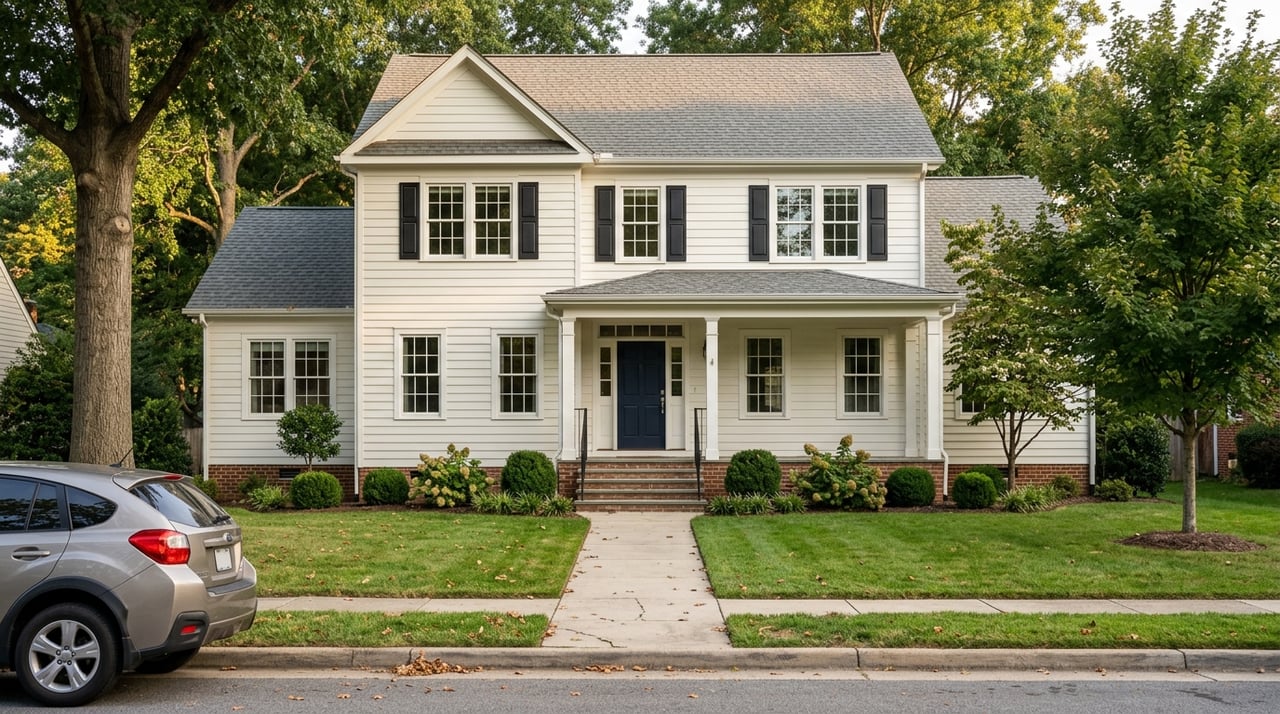
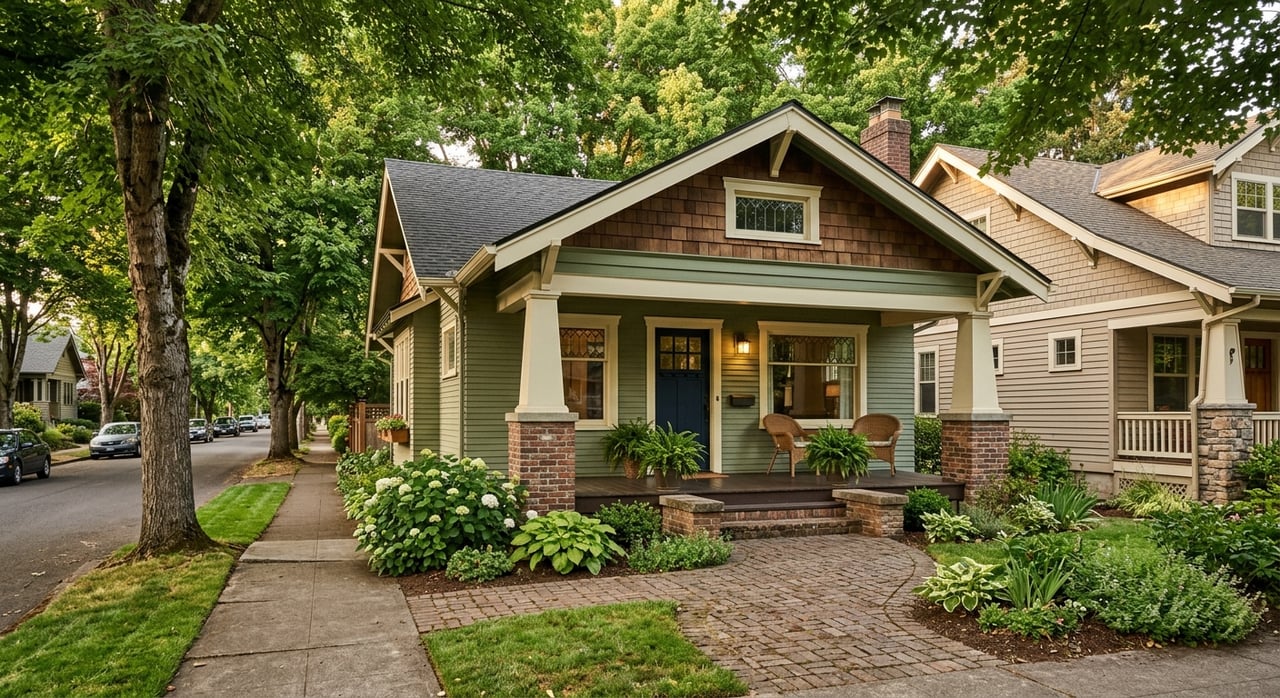
If you are drawn to older homes with front porches and smaller-scale architecture, Mount Rainier has a lot to offer. The Mount Rainier Historic District dates from 1900 to 1940 and includes 1,202 resources, with 1,025 considered contributing according to the National Register nomination.
The district is largely made up of modest detached single-family frame houses set fairly close together with common setbacks. The city also describes one- and two-story bungalows, narrow streets, front porches, and buildings constructed before 1939.
Buyers should be ready for older-home tradeoffs
This kind of housing stock can be charming, but it also calls for careful evaluation. Older homes may have layout quirks, deferred maintenance, or systems that need updating over time. If you are renovation-minded, Mount Rainier may offer the kind of value-add potential that is hard to find in more uniform neighborhoods.
That is where practical guidance matters. A neighborhood-first brokerage with renovation awareness can help you tell the difference between cosmetic updates, worthwhile improvements, and issues that deserve a closer look before you move forward.
What the Numbers Say
Mount Rainier’s market data reflects a small, established close-in community with a mix of ownership and rental housing. Census QuickFacts reports an owner-occupied housing rate of 24.3%, a median owner-occupied value of $522,100, and a median gross rent of $1,434. It also reports a median household income of $68,281.
Zillow’s Mount Rainier housing page places the average home value at $448,597 as of March 31, 2026, down 3.5% year over year. Because these figures come from different sources and methods, it is best to use them as complementary signals rather than direct apples-to-apples comparisons.
For buyers, the takeaway is that Mount Rainier can offer close-in access and strong neighborhood identity in a market where pricing still needs careful, property-specific analysis. For sellers, it is a reminder that presentation, pricing strategy, and understanding the exact block and housing style matter.
Who Mount Rainier May Suit Best
Mount Rainier can be a strong fit if you want:
- A small city feel close to Washington, D.C.
- A walkable commercial core for daily routines
- A genuine arts presence with visible local institutions
- Older homes with architectural character
- Bus access to nearby Metro and regional destinations
- A community that feels historic, active, and still evolving
It may be especially appealing if you are moving from a denser part of D.C., leaving a more car-dependent suburb, or looking for a first home with personality and close-in convenience.
The Bottom Line on Living in Mount Rainier
Mount Rainier offers something increasingly hard to find in the D.C. area: a place that feels creative and local while staying close to the city. Its walkable core, active arts ecosystem, historic housing stock, and practical transit connections give it a distinct identity that goes beyond simple convenience.
If you are considering a move here, the details matter. Block-by-block walkability, housing condition, and proximity to the commercial core can shape your experience in a big way. Working with someone who understands those nuances can help you buy or sell with more confidence.
If you are thinking about living in Mount Rainier or preparing to sell there, Licia Galinsky can help you navigate the neighborhood with practical insight, responsive guidance, and true local perspective.
FAQs
Is Mount Rainier, MD actually walkable?
- Yes. The city reports a walk score of 82, and the Rhode Island Avenue and 34th Street corridors create a walkable core, though convenience can vary by block.
Is Mount Rainier, MD known for arts and culture?
- Yes. The city is part of the Gateway Arts & Entertainment District and has studios, performance spaces, public art resources, open studio tours, and arts organizations that support an active creative scene.
What are homes like in Mount Rainier, MD?
- Most homes reflect the city’s early streetcar suburb history, with many modest detached houses, bungalows, front porches, and pre-1940 building styles.
How do people commute from Mount Rainier, MD?
- Many residents use bus service through Mount Rainier Terminal to reach nearby Metro stations and regional destinations, and the city is also a short drive from downtown Washington, D.C.
Does the Purple Line stop in Mount Rainier, MD?
- No direct in-town Mount Rainier station is identified in the project overview. The Purple Line is better understood as a future regional connection for the broader corridor.
Is Mount Rainier, MD a good fit for buyers who like older homes?
- It can be, especially if you appreciate historic character and are comfortable evaluating the upkeep and update needs that often come with older housing stock.